On February 9, 2026, the People's Committee of Dong Nai Province issued Document No. 76/KH-UBND on the Plan for Transforming Existing Industrial Parks into Green and Eco-Industrial Parks in Dong Nai Province by 2030, with a vision to 2050. Accordingly, the transformation of industrial parks into eco-industrial parks is identified as one of the key tasks, aiming to gradually establish an environmentally friendly industrial ecosystem that efficiently utilizes resources and energy. This model aims to optimize production processes, reduce emissions, promote the recycling and reuse of waste, and strengthen linkages among businesses within industrial parks.
One of the key highlights of this transformation is the adoption of cleaner production solutions (RECP – Resource Efficient and Cleaner Production). Through technological improvements, process optimization, and efficient material management, businesses can significantly reduce waste generation and production costs. At the same time, the widespread use of renewable energy, especially rooftop solar power, is being encouraged to reduce reliance on fossil fuels and contribute to the reduction of greenhouse gas emissions.
Furthermore, the eco-industrial park model places special emphasis on building a resource recycling system. Solutions such as recycling and reusing treated wastewater, utilizing production by-products, and fostering industrial symbiosis among businesses help transform “waste from one business into input for another." This not only reduces environmental pressure but also enhances the economic efficiency and sustainability of the entire industrial park.
Currently, Amata Bien Hoa Industrial Park serves as a model industrial park, gradually transforming into an eco-industrial park through the application of cleaner production practices (RECP), the implementation of wastewater recycling systems, the installation of rooftop solar power, and the promotion of industrial symbiosis to conserve resources. This industrial park has been selected as a pilot model for green and sustainable development, meeting international standards and aiming for net-zero emissions by 2050. The initial results from this model not only bring practical benefits to businesses but also create an important foundation for replication across the province.
Promoting cooperation among businesses within industrial parks is also a key factor in the transformation process. Through mechanisms for resource sharing, energy and raw material exchange, and cooperation in environmental management, businesses can jointly improve operational efficiency, reduce costs, and enhance competitiveness. At the same time, the role of state management agencies and scientific and technological organizations in providing technical support, consultation, and business connectivity is clearly demonstrated.
To effectively implement the Plan for Transforming Existing Industrial Parks into Green and Eco-Industrial Parks in Dong Nai Province by 2030, with a vision to 2050, synchronized coordination among all levels, sectors, and the business community is essential. Key elements include improving support mechanisms and policies; raising awareness; training human resources; and promoting the application of science and technology. Furthermore, the dissemination of best practices and successful models should be emphasized to encourage active participation from all stakeholders.
It can be affirmed that the transformation to eco-industrial and green industrial parks is not only an inevitable trend but also an opportunity to improve the quality of growth, protect the environment, and deepen integration with global sustainable development standards. With strong determination from all levels and sectors, along with the cooperation of the business community, the goal of developing modern and environmentally friendly eco-industrial and green industrial parks in the locality is entirely achievable in the near future, contributing to the successful implementation of Dong Nai Province's green growth and sustainable development strategy.

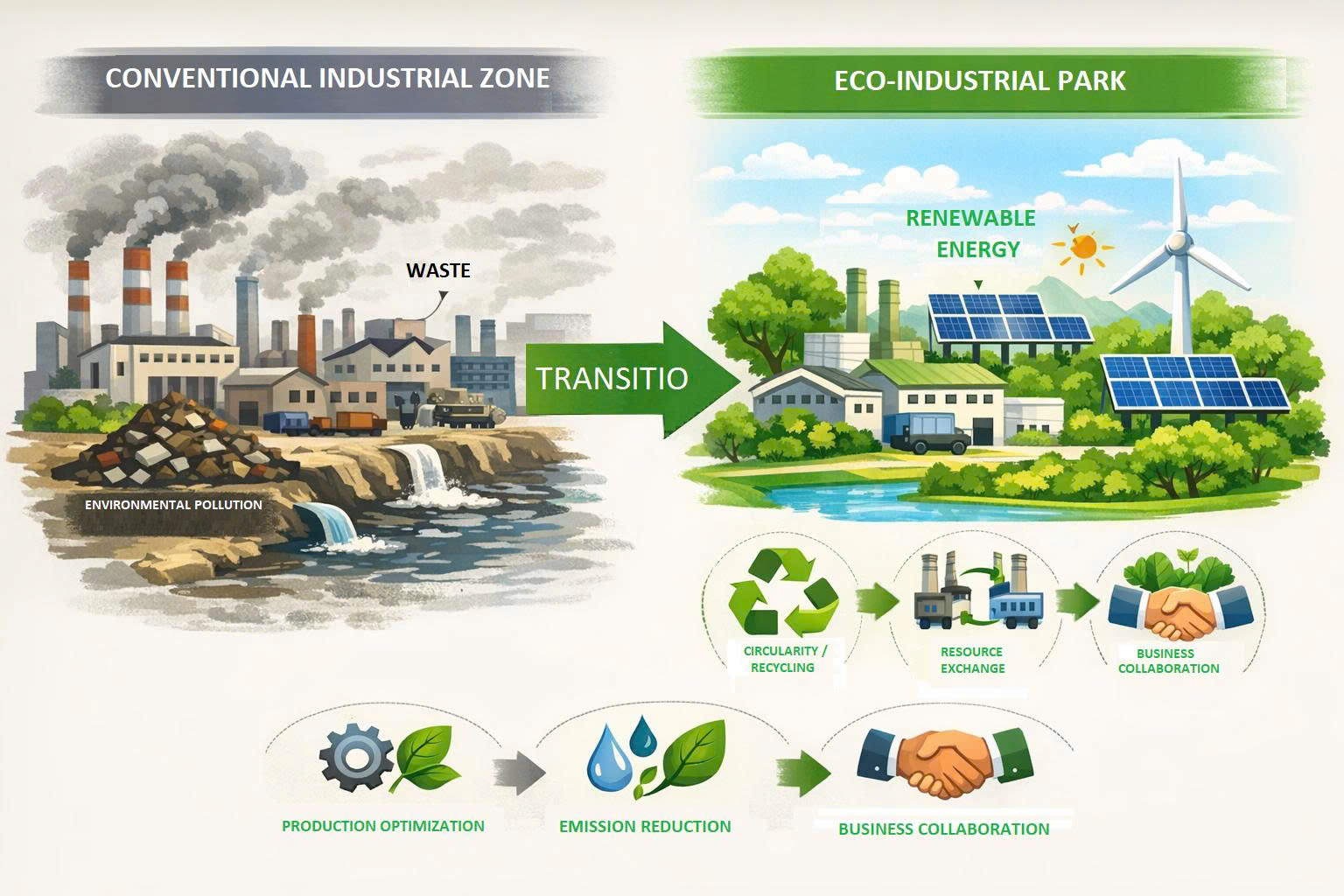
Image: A model illustrating the transformation of traditional industries into eco-industries.
(Vương Lan)